Black Cottonwood
Populus trichocarpa
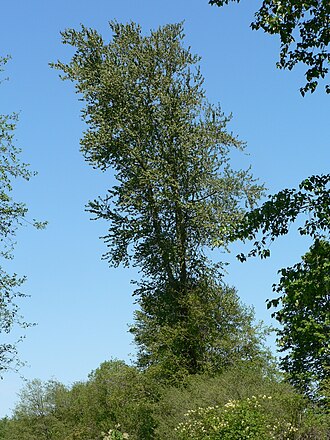
The towering cottonwood of western rivers, balsam-scented at leaf-out and shedding drifts of cottony seed in summer. The tallest western hardwood and vital riparian habitat. The inner bark, a sweet but fast-souring famine food, has been ground into flour; the sap and catkins have also been used as food.
- Family
- Salicaceae
- Type
- tree
- Lifespan
- perennial
- Height
- 100–100 ft
- Spacing
- 30–50 ft apart
- Light
- sun
- Soil moisture
- moist
- Soil pH
- acidic, neutral, alkaline
- Bloom
- March, April
- Bloom colors
- yellow
- Wildlife value
- pollinators, songbirds, mammals, larval host
- Caterpillar hosts
- ~367 butterfly & moth species
- Landscape uses
- specimen
- Native states
- AK, CA, ID, MT, ND, NV, OR, UT, WA, WY
Related native plants
More Populus species
- Quaking Aspen (Populus tremuloides)
- Eastern Cottonwood (Populus deltoides)
- Fremont Cottonwood (Populus fremontii)
- Bigtooth Aspen (Populus grandidentata)
- Narrowleaf Cottonwood (Populus angustifolia)
- Balsam Poplar (Populus balsamifera)