Black Willow
Salix nigra
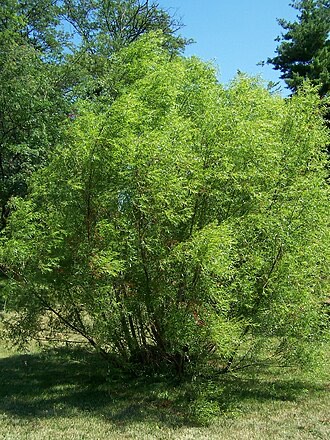
Largest native willow — a true tree, not shrub. Rough dark furrowed bark. Critical streambank stabilizer; host plant for viceroy and mourning cloak butterflies. Bark is the original source of salicylic acid (aspirin).
- Family
- Salicaceae
- Type
- tree
- Lifespan
- perennial
- Height
- 30–60 ft
- Spacing
- 30–60 ft apart
- Light
- sun, part shade, shade
- Soil moisture
- moist
- Soil pH
- acidic, neutral, alkaline
- Bloom
- February, March, April, May, June, July
- Bloom colors
- yellow
- Wildlife value
- songbirds, butterflies, larval host
- Caterpillar hosts
- ~455 butterfly & moth species
- Landscape uses
- naturalizing, rain garden
- Native states
- AL, AR, CO, CT, DC, DE, FL, GA, IA, IL, IN, KS, KY, LA, MA, MD, ME, MI, MN, MO, MS, NC, NE, NH, NJ, NY, OH, OK, PA, RI, SC, TN, TX, VA, VT, WI, WV
Related native plants
More Salix species
- Arroyo Willow (Salix lasiolepis)
- Sandbar Willow (Salix exigua)
- Coastal Plain Willow (Salix caroliniana)
- Pussy Willow (Salix discolor)
- Prairie Willow (Salix humilis)
- Shining Willow (Salix lucida)