Slippery Elm
Ulmus rubra
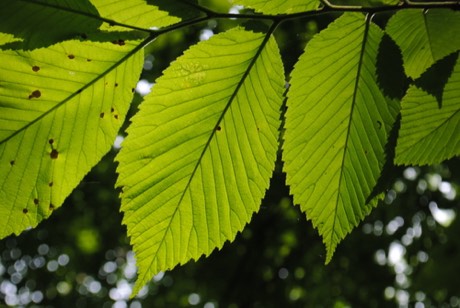
Also known as: Red Elm
Distinguished from American elm by sandpaper-rough leaf surface and hairy buds. Less susceptible to Dutch elm disease but not immune. The mucilaginous inner bark — long chewed as a thirst quencher and used as a sore-throat lozenge — can be dried into a soup thickener or bread flour; immature fruit and a tea brewed from the bark are also traditional uses.
- Family
- Ulmaceae
- Type
- tree
- Lifespan
- perennial
- Height
- 40–60 ft
- Spacing
- 30–50 ft apart
- Light
- sun, part shade
- Soil moisture
- moist
- Soil pH
- acidic, neutral
- Bloom
- January, February, March, April
- Bloom colors
- red, yellow, green, brown
- Wildlife value
- songbirds, butterflies, larval host
- Caterpillar hosts
- ~215 butterfly & moth species
- Landscape uses
- naturalizing
- Native states
- AL, AR, CT, DC, DE, FL, GA, IA, IL, IN, KS, KY, LA, MA, MD, ME, MI, MN, MO, MS, NC, ND, NE, NH, NJ, NY, OH, OK, PA, RI, SC, SD, TN, TX, VA, VT, WI, WV