Scarlet Bee Balm
Monarda didyma
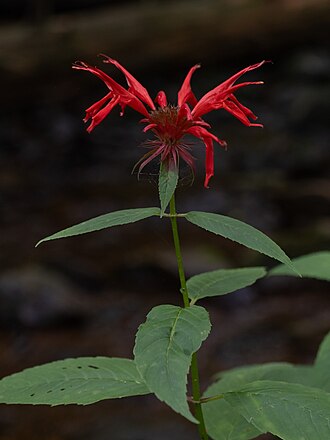
Scarlet bee balm blazes with shaggy red flowers that hummingbirds and butterflies cannot resist, spreading into colonies in moist, rich soil. The classic native bee balm; give it air flow to limit mildew. Leaves and flowers season salads and drinks, and the leaves brew into a fragrant tea with an Earl Grey–like note.
- Family
- Lamiaceae
- Type
- wildflower
- Lifespan
- perennial
- Height
- 2–4 ft
- Spacing
- 2–3 ft apart
- Light
- sun, part shade
- Soil moisture
- moist, wet
- Soil pH
- acidic
- Bloom
- May, June, July, August, September, October
- Bloom colors
- red
- Wildlife value
- butterflies, hummingbirds, pollinators, larval host
- Caterpillar hosts
- ~7 butterfly & moth species
- Landscape uses
- naturalizing, rain garden
- Native states
- DC, GA, KY, MA, MD, MI, MO, NC, NJ, NY, OH, OR, PA, SC, TN, VA, WA, WI, WV
Related native plants
More Monarda species
- Wild Bergamot (Monarda fistulosa)
- Lemon Bee Balm (Monarda citriodora)
- Spotted Beebalm (Monarda punctata)
- Eastern Bee Balm (Monarda bradburiana)
- Plains Beebalm (Monarda pectinata)