Marsh Blue Violet
Viola cucullata
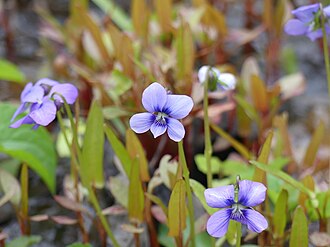
Marsh blue violet thrives in wet meadows, seeps, and stream edges, with blue-violet flowers held above the leaves. A fritillary host for damp, sunny-to-shaded ground. Young leaves and flower buds are edible raw or cooked, thickening soups much like okra; a tea can be made from the leaves.
- Family
- Violaceae
- Type
- wildflower
- Lifespan
- perennial
- Height
- 0–0.8 ft
- Spacing
- 0.5–1 ft apart
- Light
- sun, part shade, shade
- Soil moisture
- moist, wet
- Soil pH
- neutral
- Bloom
- April, May, June
- Bloom colors
- blue
- Wildlife value
- butterflies, pollinators, larval host
- Caterpillar hosts
- ~29 butterfly & moth species
- Landscape uses
- border, naturalizing, rain garden
- Native states
- AL, CT, DC, DE, GA, IA, IL, IN, KY, MA, MD, ME, MI, MN, MO, NC, NE, NH, NJ, NY, OH, PA, RI, SC, TN, VA, VT, WI, WV
Related native plants
More Viola species
- Bird's-foot Violet (Viola pedata)
- Canadian White Violet (Viola canadensis)
- Stream Violet (Viola glabella)
- Cream Violet (Viola striata)
- Western Dog Violet (Viola adunca)
- Long-spurred Violet (Viola rostrata)