Sensitive Fern
Onoclea sensibilis
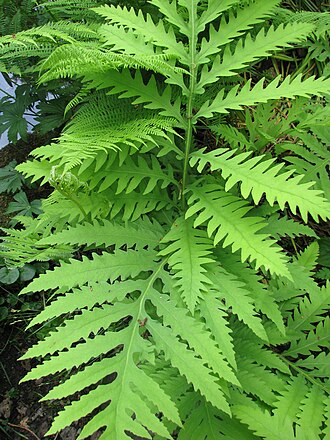
Named for sensitivity to first frost. Distinctive bead-like fertile fronds persist through winter; spreads by rhizomes. Fiddleheads have historically been eaten, but modern foraging guidance advises against it — sensitive fern isn't considered a safe fiddlehead, and mature fronds carry a thiaminase-like toxin blamed for neurological illness in grazing livestock.
- Family
- Onocleaceae
- Type
- fern
- Lifespan
- perennial
- Height
- 3–4 ft
- Spacing
- 3–4 ft apart
- Light
- part shade, shade
- Soil moisture
- moist, wet
- Soil pH
- acidic, alkaline
- Wildlife value
- songbirds
- Landscape uses
- border, naturalizing, rain garden
- Native states
- AL, AR, CO, CT, DC, DE, FL, GA, IA, IL, IN, KS, KY, LA, MA, MD, ME, MI, MN, MO, MS, NC, ND, NE, NH, NJ, NY, OH, OK, PA, RI, SC, SD, TN, TX, VA, VT, WI, WV, WY