Moonflower
Ipomoea alba
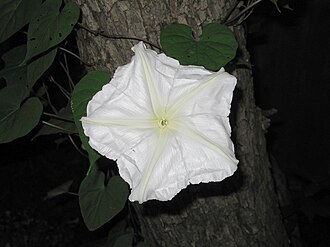
Moonflower unfurls huge, fragrant white trumpets at dusk for night-flying moths, a fast tropical-looking native vine for warm, sunny trellises and arbors. Young leaves and the fleshy base of the flower are cooked as a vegetable in soups, stews, and curries; young seeds have also been eaten. Don't confuse this true moonflower (Ipomoea alba) with the plant sometimes sold under the same common name, Datura — a genuinely toxic, hallucinogenic genus.
- Family
- Convolvulaceae
- Type
- vine
- Lifespan
- annual
- Height
- 10–15 ft
- Spacing
- 3–6 ft apart
- Light
- sun
- Soil moisture
- moist
- Soil pH
- acidic, alkaline, neutral
- Bloom
- June, July, August, September, October
- Bloom colors
- white
- Wildlife value
- pollinators
- Landscape uses
- hedge or screen
- Native states
- FL, OH, TX
Related native plants
More Ipomoea species
- Railroad Vine (Ipomoea pes-caprae)
- Scarlet Morning Glory (Ipomoea hederifolia)
- Bush Morning Glory (Ipomoea leptophylla)