Honey Locust
Gleditsia triacanthos
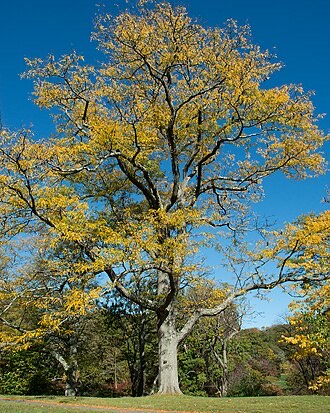
Honey locust casts light, dappled shade through ferny compound leaves, with fragrant spring flowers and long sweet seed pods relished by wildlife. Extremely tough on poor, dry, or alkaline urban soils; wild trees bear formidable thorns. The sweet pulp inside the long pods (not the hard seeds) is edible raw, tasting of honey — the source of the common name.
- Family
- Fabaceae
- Type
- tree
- Lifespan
- perennial
- Height
- 60–80 ft
- Spacing
- 60–80 ft apart
- Light
- part shade
- Soil moisture
- moist
- Soil pH
- acidic, neutral, alkaline
- Bloom
- May, June
- Bloom colors
- yellow
- Wildlife value
- butterflies, larval host
- Caterpillar hosts
- ~46 butterfly & moth species
- Landscape uses
- specimen
- Native states
- AL, AR, CT, DC, FL, GA, IA, IL, IN, KS, KY, LA, MA, MD, MI, MN, MO, MS, NC, ND, NE, NH, NM, NY, OH, OK, RI, SD, TN, TX, VA, WI, WV