Green Ash
Fraxinus pennsylvanica
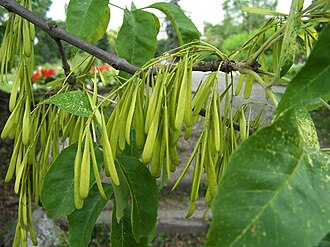
Green ash is a fast, adaptable native ash once planted everywhere for quick shade, with golden fall color and abundant wildlife seed. The emerald ash borer has hit it hard, so weigh that risk against its toughness. The inner bark (cambium) has been eaten cooked or dried into flour, said to taste like eggs — a minor, historical food use.
- Family
- Oleaceae
- Type
- tree
- Lifespan
- perennial
- Height
- 50–70 ft
- Spacing
- 35–50 ft apart
- Light
- sun, part shade, shade
- Soil moisture
- dry, moist, wet
- Soil pH
- acidic, neutral, alkaline
- Bloom
- April, May, June
- Bloom colors
- green, purple, brown
- Wildlife value
- songbirds, butterflies, larval host
- Caterpillar hosts
- ~149 butterfly & moth species
- Landscape uses
- specimen, rain garden
- Native states
- AL, AR, CO, CT, DC, DE, FL, GA, IA, IL, IN, KS, KY, LA, MA, MD, ME, MI, MN, MO, MS, MT, NC, ND, NE, NH, NJ, NY, OH, OK, PA, SC, SD, TN, TX, UT, VA, VT, WI, WV, WY
Related native plants
More Fraxinus species
- White Ash (Fraxinus americana)
- Oregon Ash (Fraxinus latifolia)
- Texas Ash (Fraxinus albicans)
- Black Ash (Fraxinus nigra)
- Blue Ash (Fraxinus quadrangulata)
- Velvet Ash (Fraxinus velutina)